No matter how you measure it, a Firkin is a lot of butter
-
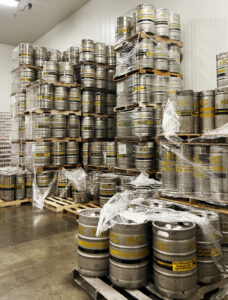
- (Photo by Art Smith) Firkins (kegs) of beer stacked up in a cooler of a Milwaukee brewery await shipment.
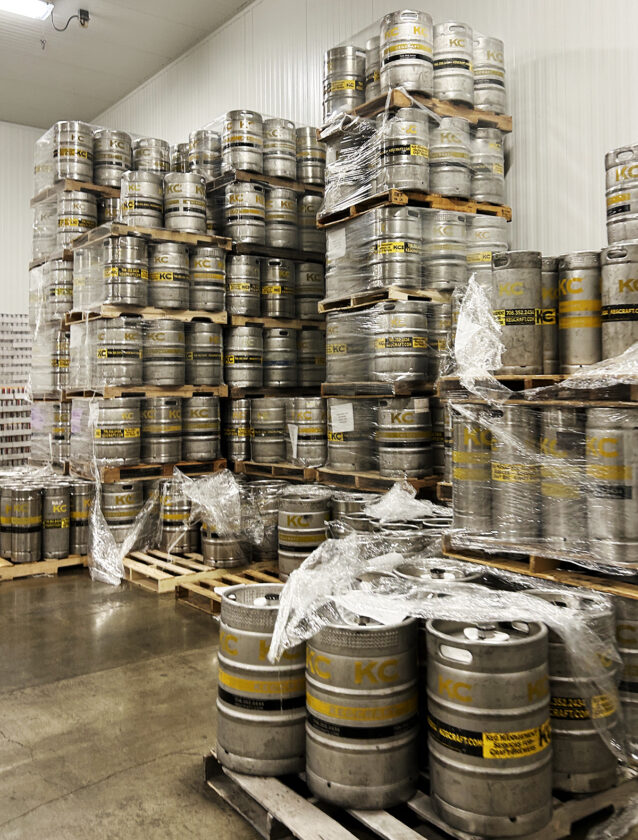
(Photo by Art Smith) Firkins (kegs) of beer stacked up in a cooler of a Milwaukee brewery await shipment.
When Rufus Putnam and his group of men set out to form Marietta 228 years ago, they did a little shopping along the way to make sure they would have enough to eat. Among their purchases was 500 pounds of hard bread and a firkin of butter.
Last year I wrote a long account of their April 1788 trip down the Ohio River. I was intrigued about exactly what a firkin was, so I started doing a little research on it.
It’s a little complicated because the unit of measurement has been around for a long time and it is different if you are measuring liquid or a solid, and whether you are American or British.
The firkin of butter purchase in 1788 could have been any of those.
A rundown of what a firkin is just adds to the confusion as to how much butter arrived in Marietta in 1788.
The British used the word firkin to describe the packaging of both butter and cheese. A firkin of either weighs 25 kilograms or around 56 pounds. That is a lot of butter, but they had 500 pounds of bread, so they likely needed it.
A firkin was used as a unit to describe dry things as well. One firkin equaled 9 gallons. A firkin of salted butter was described as weighing 100 pounds by John Burroughs in his boyhood memoir. Which raises the question of was butter considered a solid or a liquid in 1788. As anyone that has ever dropped a pat of butter on a hot baked potato knows, it can be both.
The British also use it to describe a unit for ale, beer and wine. One beer firkin is a quarter of a barrel which equals 9 imperial gallons or 10.8 gallons. A wine firkin is huge and equals 70 imperial gallons. Firkin has been used to describe containers that hold alcoholic beverages for centuries and through different cultures with the actual volume changing over time.
With the British, the largest unit is a hogshead, which contains 6 firkins, smaller than a hogshead is a barrel, which is four firkin and the kinderkin which is two. Americans used British units until we came up with our own units, and this formally happened some years after the butter purchase.
Firkin is a very old unit of measure and pops up at many interesting places in history, including the Bible. In the book of John, Chapter 2, Verse 6. — “And there were set there six waterpots of stone, after the manner of the purifying of the Jews, containing two or three firkins apiece.” The water that Jesus turned to wine was in firkins, just as Rufus Putnam’s butter was more than 1,700 years later. The firkins in the Bible were believed to be a little smaller, measuring around 8.75 gallons.
Firkins are still used today to store alcoholic beverages. Today we normally call them by their nickname “keg.” The Beverage Factory sells empty ones under the name “Kegco 10.8 Gallon Firkin Beer Keg Cask.”
My first introduction to firkins, I mean “kegs” was at Ohio University. As a freshman in 1979, firkins frequently found their way into Read Hall where the young male residents quickly consumed the contents of the firkins. Rufus Putnam co-founded Ohio University in 1803. Little did he know that nearly two centuries later students would be buying beer in the same size container that he purchased butter.
We stored our firkins in a giant pail of ice until it was consumed.
I have no idea how Putnam stored his firkin of butter since they would have had neither ice, nor the appropriately named Kegerator, which is capable of keeping a firkin of anything cold for around $1,000.
Art Smith is online manager of The Marietta Times and The Parkersburg News and Sentinel, he can be reached at asmith@mariettatimes.com
Local News

Faithful participate in cross walk for Good Friday

Ohio State investigating Epstein payments to gynecologist
MOV Climate Corner: No kings, no exceptions
By Jean Ambrose Easter is the most important day in the year for Christians. It commemorates the state torture ...

Reaching up

Monday deadline to register to vote in Ohio