
The Way I See It: Fire devastated Ohio Pen in 1930
Trending
The Ohio State Penitentiary fire of 1930 took more than 300 lives after it swept through the locked cells of the Columbus facility. Two of those killed were from Washington County.
The large facility had been an imposing presence in downtown Columbus since 1834. If you have had fun attending a concert or a hockey game at Nationwide Arena, you were doing so at the same location where the prison sat until 1984. At its peak in 1955, more than 5,000 prisoners were held behind its stone walls. At the time of the fire there were around 4,000 inmates housed there.
The fire in 1930 dominated the front pages of Ohio newspapers for days. The coverage painted a dark picture of what had happened and the missteps that took place as the fire spread.
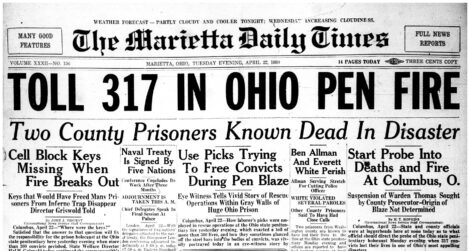
The front page of the April 22, 1930, edition of The Marietta Times screamed out “TOLL 317 in OHIO PEN FIRE.” Before it was over, 322 would die in the fire that also injured 230 - it was one of the worst prison fires the country had ever seen, according to The Times.
Two of those that died were from Washington County. Ben Allman had been arrested at Second and Putnam streets and was later convicted of attempting to cut a police officer. Everett White was doing time for violating his parole after serving a sentence for his part in the theft of an iron safe from a company in Beverly.
On the night of the fire, prisoners had just been locked in for the night. In 1930 the locks required keys and after the fire started the keys could not be located. The finger-pointing started immediately.
"Where were the keys?" asked State Welfare Director Hal Griswald. "Where were the keys to those cells?' demanded Griswald.
The Times reported that they were kept 900 feet from where the fire started, but were missing when guards went to get them.
Most of those who died, did so because they were trapped in their cells. Some managed to pick the locks and escaped the fire. Sledgehammers and crow bars were used to open some of the doors.
When firefighters arrived, they were met with rocks being thrown by prisoners. The entire facility was quickly surrounded with guards and with 500 troops from nearby Fort Hayes. They all had orders to "shoot to kill" if needed. National Guard troops soon arrived to help out.
The blame game to determine the cause of the fire as well as how so many men died locked into their cells continued for days. Calls were made for Warden P.E. Thomas to be suspended from his job by Ohio Governor Myers Cooper, who put a team together to attempt to find answers.
Prisoners refused to testify as to the cause of the fire, and the prison remained under strong guard for days after the fire, with 1,000 national guards stationed around the facility.
Five days after, burials of unclaimed bodies had started with whites being buried in Eastlawn Cemetery and blacks being laid to rest in Evergreen Cemetery a mile away.
A week later, The Times reported that "iron rule" was in effect at the prison and order had been restored.
On April 29, eight days after the fire, 45 local members of Company A of the 166th Infantry Army Reserve unit were called up from Marietta. The Marietta City Hall fire bell rang 14 times at 11 a.m. to alert them. By 1 p.m., they were on a bus heading for Columbus. They were to be "quartered" on the State House grounds, the Times reported, with Columbus restaurants preparing their meals.
The Ohio Pen closed in 1984 and was demolished in 1997.
Art Smith is online manager of The Marietta Times and the Parkersburg News and Sentinel. He can be contacted at asmith@mariettatimes.com