
Historic Barker family home for sale
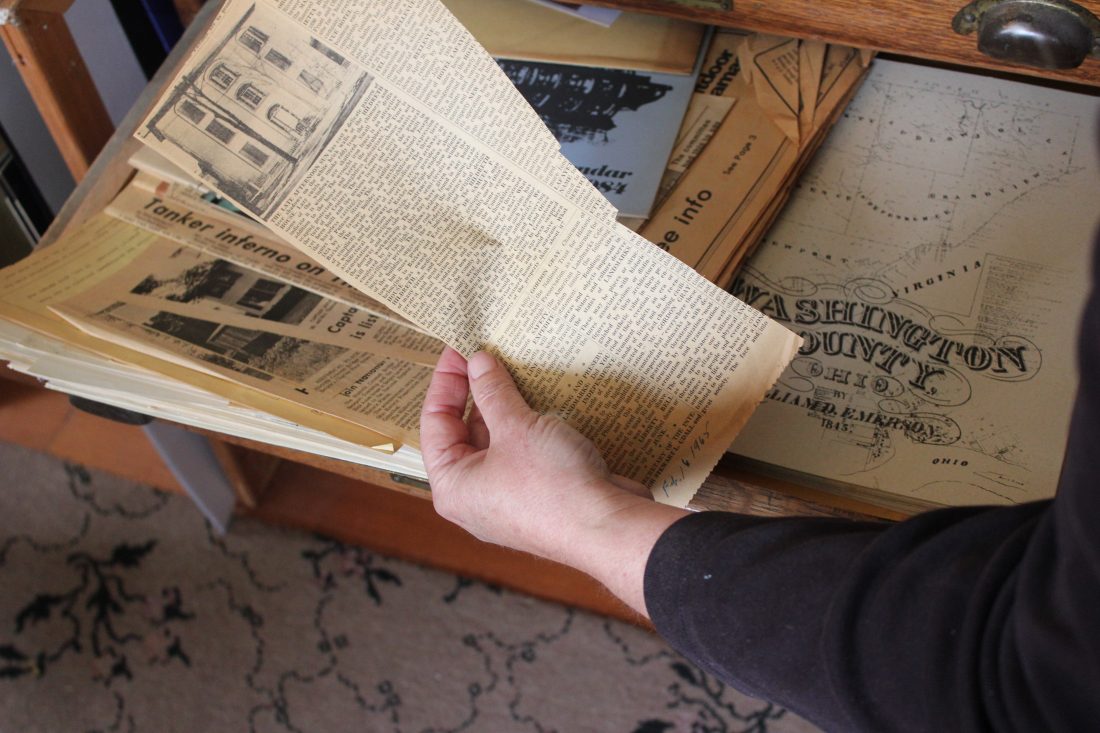
JANELLE PATTERSON The Marietta Times Kelly Lincoln searches through historical documents on the Barker family in her home in Devola Friday.
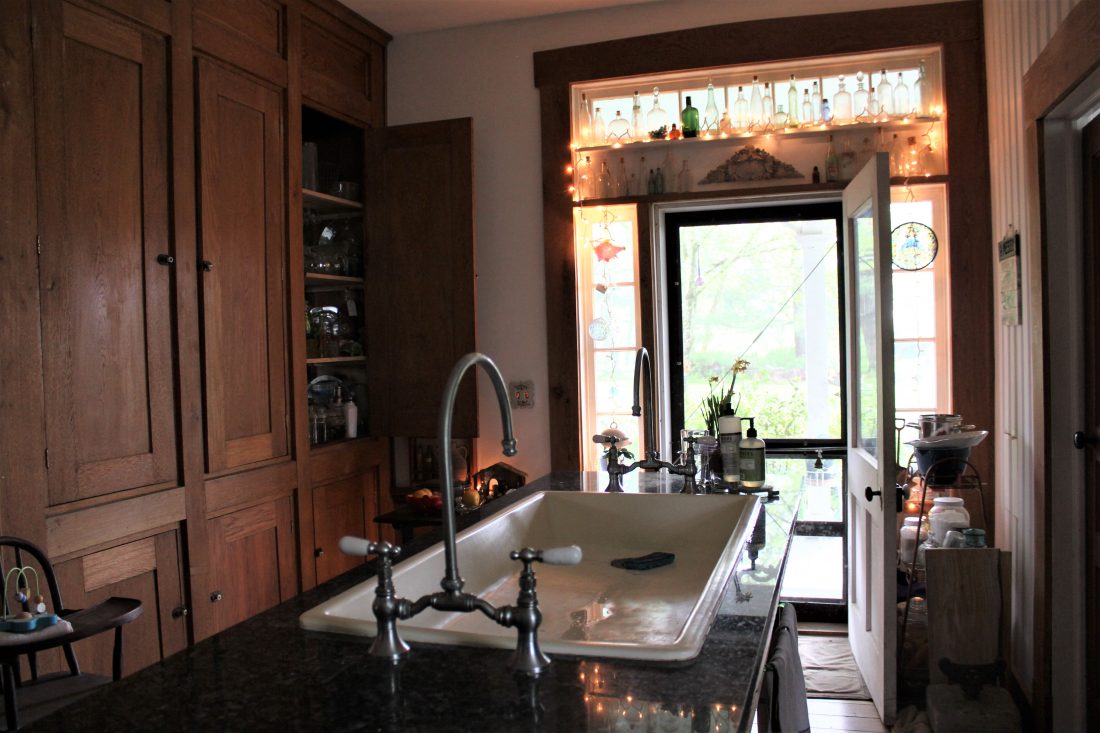
JANELLE PATTERSON The Marietta Times Updates to the historic Col. Joseph Barker House have included "un-renovating" the home back to its original wood cabinets and window frames and reopening original door frames like in the kitchen while repurposing farm tables to add the kitchen sink.
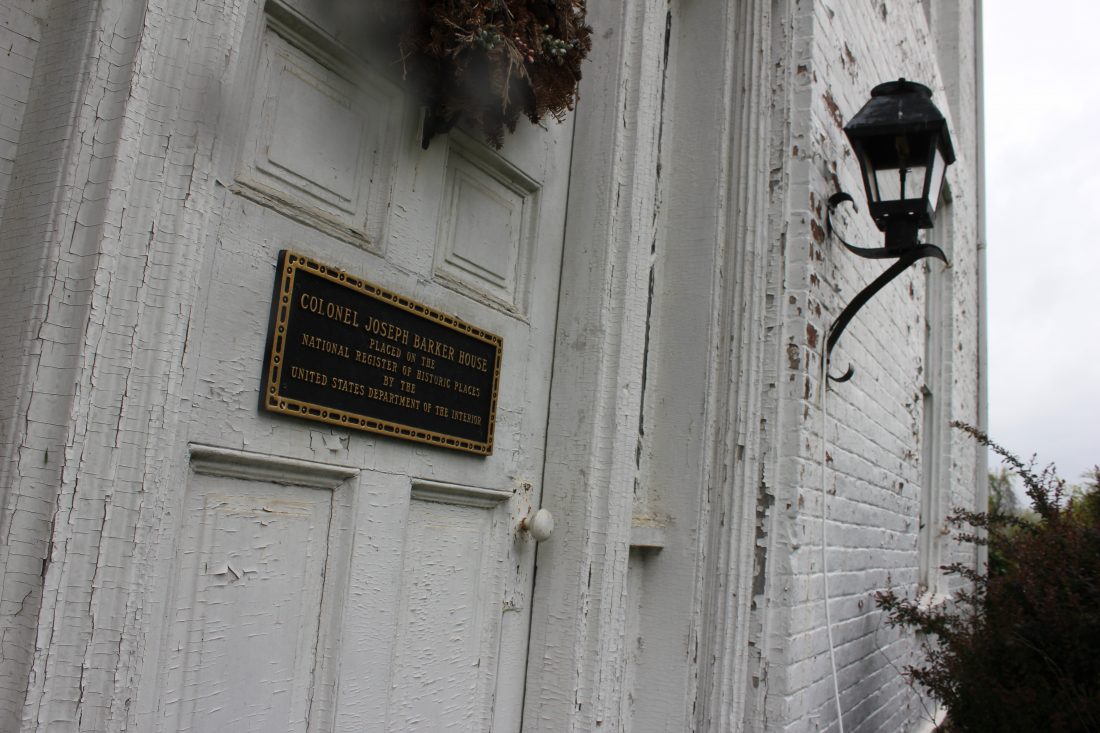
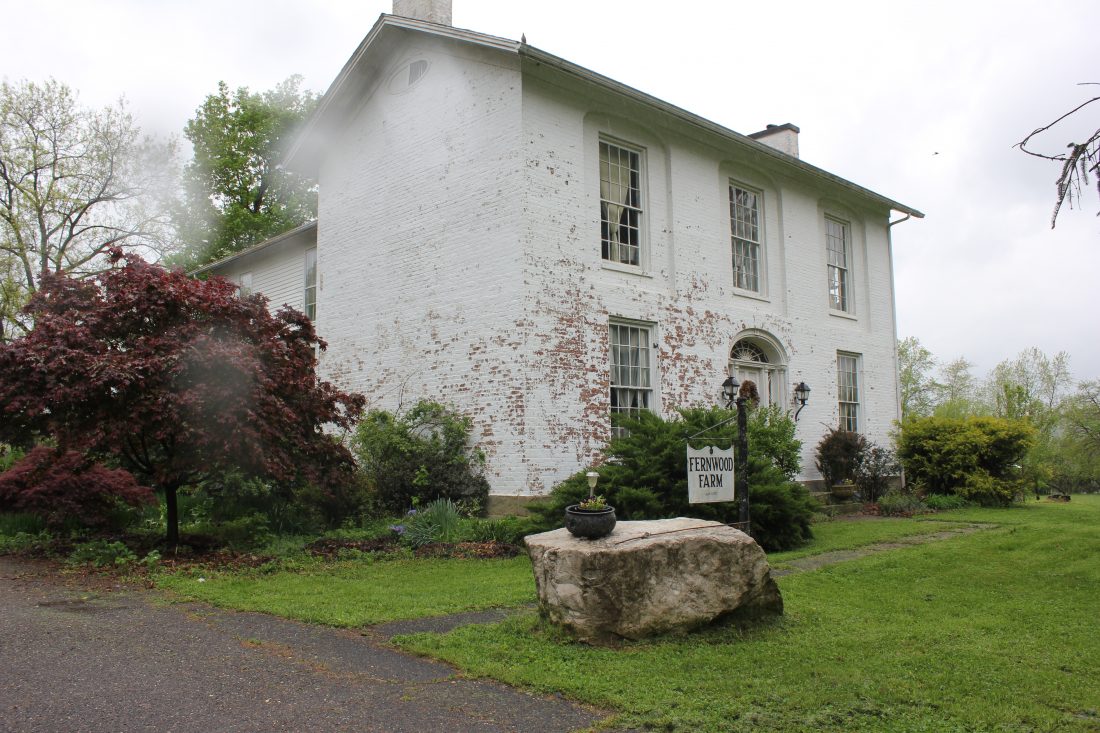
JANELLE PATTERSON The Marietta Times The Col. Joseph Barker House in Devola appeared back in real estate ads recently. The house has been on the National Historic Register since 1978 and was built in 1811.
JANELLE PATTERSON The Marietta Times Kelly Lincoln searches through historical documents on the Barker family in her home in Devola Friday.
JANELLE PATTERSON The Marietta Times Updates to the historic Col. Joseph Barker House have included "un-renovating" the home back to its original wood cabinets and window frames and reopening original door frames like in the kitchen while repurposing farm tables to add the kitchen sink.
JANELLE PATTERSON The Marietta Times The Col. Joseph Barker House in Devola appeared back in real estate ads recently. The house has been on the National Historic Register since 1978 and was built in 1811.
Trending
More than 200 years since its foundation was laid, a humble farm still hosts orphaned animals, fruit trees and the detailed architecture which landed it on the National Historic Register in 1978.
Col. Joseph Barker, who lived from 1765 to 1843, left his fingerprints across the Mid-Ohio Valley as one of Ohio’s earliest master builders.
His family home and 11 acres of land in Devola appeared in ads for sale again recently under real estate broker David Dernberger.
“It’s one of the best examples of the federal style that has survived in such incredible condition,” said Dernberger.
The property has been owned by Kelly Lincoln since she and her late husband purchased the land and home around 2004.
“I like to say we un-renovated it,” laughed Lincoln as she described pulling up ’50s-era shag carpet, removing wallpaper and lowered ceilings and restoring the hardwood floors. “But even where there are marks or the tack holes from the carpets in the wood, that’s a part of this building’s history, too.”
Now Lincoln hopes a family with goals to build their own memories in the historic walls will take on the torch of preservation and adding to its history.
“I’ve always loved restoring old houses, and I had goals all my life to be an artist and have my own farm,” she explained. “I’ve gotten to work with many architects over the years and appreciate the things we could still honor here and have our turn.”
The house is a two-story rectangular building of white-painted brick set on a cut sandstone foundation.
“The original sandstone is still there, and it’s cut so precisely that the front of the house hasn’t settled at all. Now, the addition which we believe was completed around 1830 has settled a bit off the back,” added Lincoln. “But the basement and root cellar have so many entrances and ways to get in and out of there, plus with the history we know about the Barkers, this had to have been a part of the Underground Railroad.”
The claim is possible since the Barkers were staunch abolitionists, though records from the Barkers about their own family are scarce, said Lincoln.
“They wrote about everything else, but they were humble, private people,” she continued.
That humility isn’t surprising to local archaeologist Wes Clarke, who has been working with the county historical society and U.S. Sen. Rob Portman to save another home built by Col. Barker for his son Judge Joseph Barker in the Newport area.
“Typically it’s Rufus (Putnam) and Mannaseh (Cutler) that get talked about over and over in the early history of this area, but as I’ve started to get to know the Barker story I’m learning that they were an integral part of the development of the area,” said Clarke. “They don’t get talked about as often.”
Lincoln said she feels connected to how they humbly and judiciously carried out their lives.
“They were very well-educated, and built up this farm with so many different outbuildings across the property--it was a working farm, and they had so many children who they raised and schooled, boys and girls alike which was ahead of its time--they never had slaves, they paid all their working hands,” explained Lincoln.
According to the National Historic Register, early photographs show the unpainted house brick with white trim.
“They also reveal a great number of small outbuildings extending along the northern side of the house, and although they no longer stand, their foundations are still in evidence,” it reads.
“Oh they’re still out there, and now with the greenhouse, the barn I have here and other buildings, it’s true to that working nature of the farm,” added Lincoln.
The registration also accounts for a carriage house for two carriages, a white shop, two barns and a white log house for spinning that was later used as a tool house.
The property also had an ice house, explained Lincoln.
“They even had a museum with (American) Indian artifacts here because they acknowledged what came before them on these lands,” she added.
Acknowledging what came before, while making room for the next set of memories is all she hopes for the property, whether it’s a renter that takes on the home or a buyer.
“It’s time for a new family and new memories to be built here,” she smiled.
Both Lincoln and Clarke noted not only the details in the architecture of Barker’s buildings but also the way the women of the family behaved.
Lincoln keeps a copy of a book on Francis Dana Barker Gage amongst the old papers, newspaper clippings and photos to stay with the property, and Clarke is looking forward to an upcoming lecture on Gage, an abolitionist and suffragette of national significance.
“I’m looking forward to The Pink Museum’s lecture on here coming up next week,” he noted, referring to the lecture to occur at Marietta College Tuesday. “It will be in Thomas Hall at 7 p.m.”