Mussel re-introduced into river
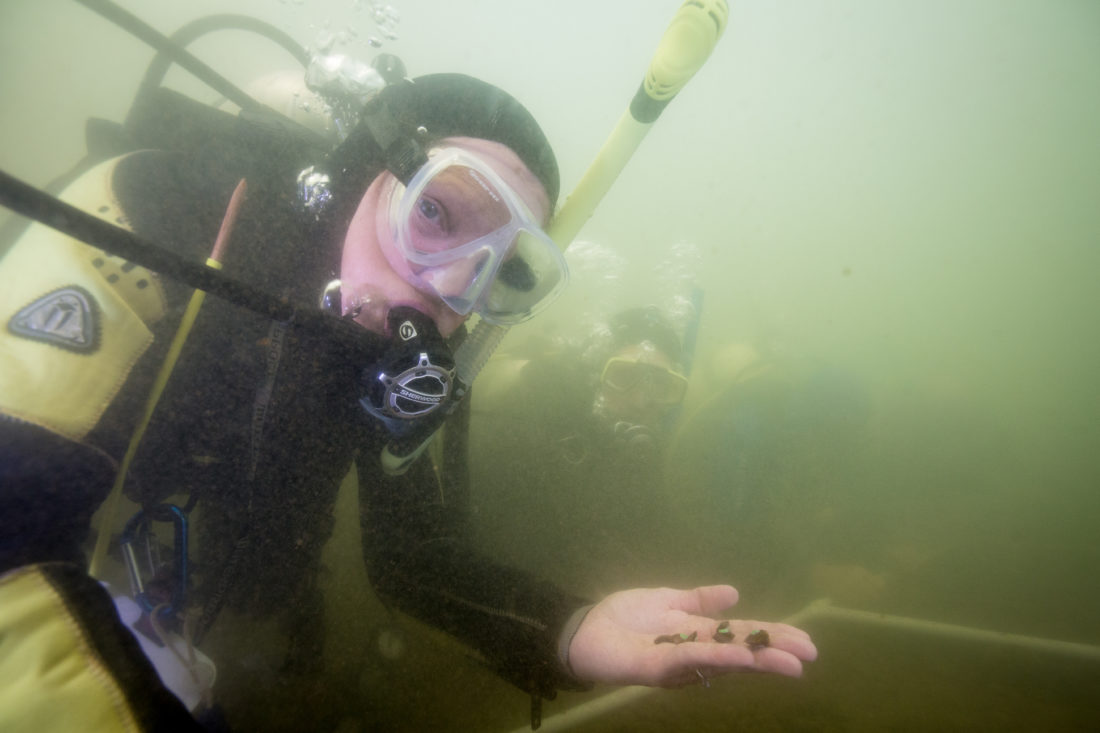
WILLIAMSTOWN–Endangered since July 10, 1990, the Purple Cat’s Paw Pearlymussel has had a hard time in the nation’s freshwaters.
“At one point they thought it was truly gone,” said Michael Schramm, a ranger at the Ohio River Wildlife Refuge in Williamstown. “Then in 1995 a shell was found in the Killbuck Creek which is a tributary of the Muskingum River.”
But Wednesday, after growing up in two labs, one in Kentucky and the other farther south in West Virginia, 50 Purple Cat’s Paw Pearlymussels were reintroduced into the Ohio River.
The mussel had mostly died off in the last 120 years due to agricultural and industrial runoff polluting the freshwaters and driving off the fish the mussels use to repopulate.
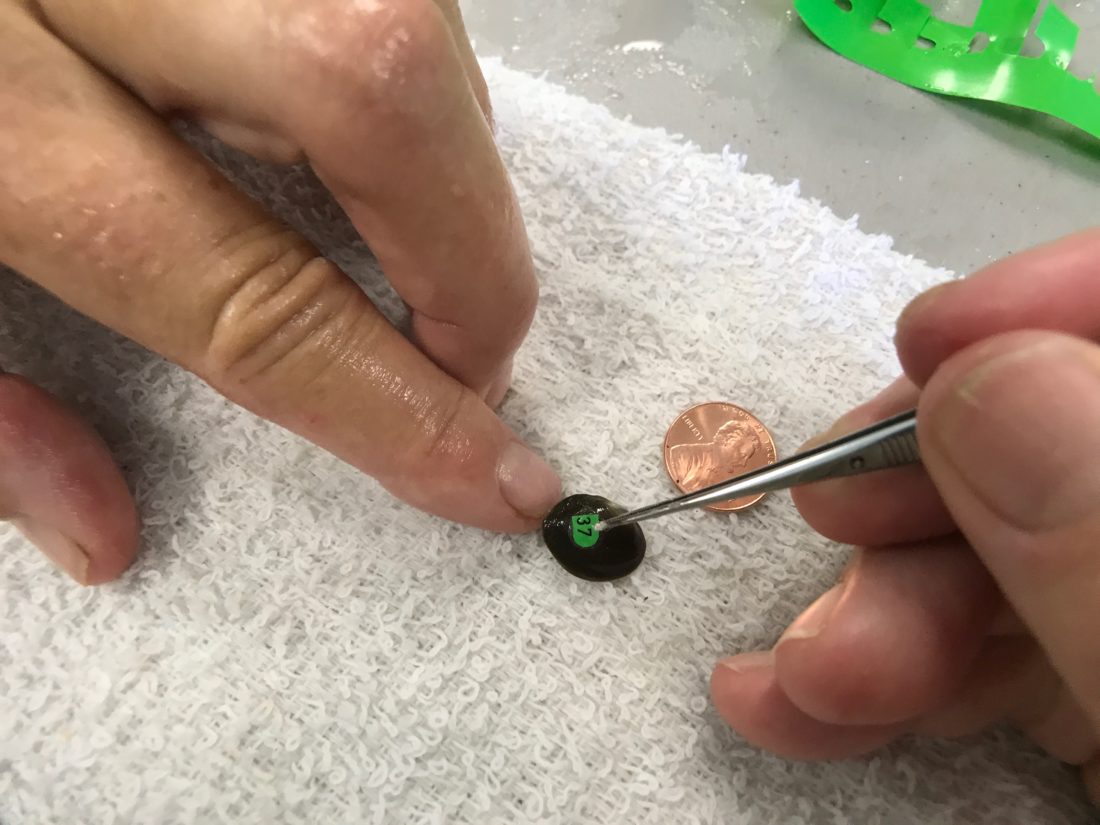
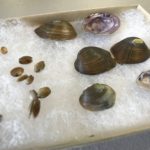
JANELLE PATTERSON The Marietta Times Janet Clayton from the West Virginia Division of Natural Resources superglues numbered tags to 50 Purple Cat’s Paw Pearlymussels before they are released into the Ohio River Wednesday in a pilot study.
“Back when the Ohio River Valley was settled and our industries grew up along the river, they used the rivers poorly so we had pollution problems,” explained Patricia Morrison, the head biologist for the refuge. “In addition to clean water, they need a healthy fish population. They use the fish population to reproduce, it’s a very elegant dance. Their babies have to travel on fish to find new areas to live.”
To rebuild the population scientists have fed the lab-grown population the algae and nutrients they need through petri-dish cultures. This is the first release of the lab-grown group and officials say before other sets are released in other freshwater locations in the Ohio River Basin, this population will be studied. Then future generations may follow suit.
Mussels themselves are imperative to clean water, explained Morrison.
“For people, freshwater mussels are an integral part of our natural rivers and streams. They have a purpose, their role in the ecosystem is to clean our water for us so they are constantly filtering the water,” she said, explaining the siphoning process the mussels enact. “They bring in dirty water, they take all the particles, the food the algae, the silt, even the chemicals, and they spit out clean water so they’re essentially cleaning our waters for free. The more mussels we have the cleaner the water is and the cleaner the water the better for people who depend on that water.”
She said there are about 300 species of mussels in North America and the Ohio River has more than 130 of them.
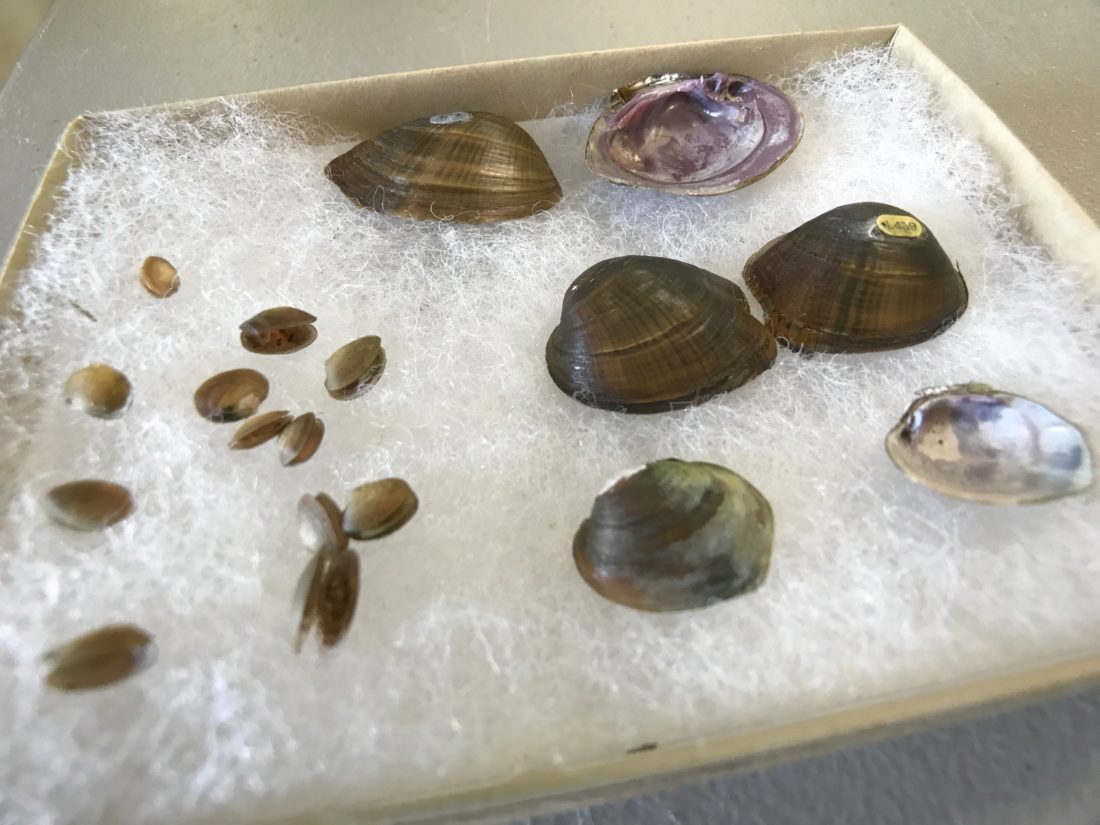
“So this group of animals is fascinating and its shapes, colors and sizes are all very different,” she explained. “We’re here today wrapping up what amounts to a 10 to 12 year effort to bring back a freshwater mussel to the river systems that’s been gone for many years. It’s exciting to science because it’s a species that people thought was extinct…Since it was first found again in 1995 people have been working across state lines, across agencies to try and find a way to restore this species back to its historic range.”
The release included 50 mussels that had been grown in a lab in the Kentucky Department of Fish and Wildlife Resources Center for Mollusk Conservation and White Sulphur Springs National Fish Hatchery in West Virginia. Prior to the release, Janet Clayton from the West Virginia Division of Natural Resources superglued small bright green tags to the mussels’ shells while Biologist Tyler Hern measured each shell and Morrison recorded the measurements.
“Once mussels reach a certain size they’re going to do better on their own so these have reached sub-adulthood where they should fare pretty well,” Hern said.
“But this is a pilot study, that’s why we’re only releasing 50 right now,” added Clayton. “We want to make sure these survive before we put more into the rivers.”
The group of mussels was taken by four divers Wednesday to a new home in the floor of the Ohio River to the south side of Buckley Island.
“We’ll poke a hole in the substrate and plant them in there in a protected 2-by-1 meter quads we marked out this morning in the riverbed,” explained Clayton. “We took GPS coordinates and planted stakes there so next year we’ll go and look for the stakes and we’ll waft out the sand and hopefully they will be bigger.”
With underwater slates attached to their arms, next year’s divers will be able to record the measurements and the tag numbers of the mussels found and will further track the lifespan of the now two-and-a-half-year-old population.
“We’ve had very little mortality and they stay put when we’ve planted other species this way,” she explained. “So mostly we’re looking for survival when we go back.”
Natural predators of most mussels include muskrats, river otters, raccoons, freshwater drum fish, big river red horses and some carp.
At a glance
About Purple Cat’s Paw Pearlymussel:
¯ Status: Endangered, listed July 10, 1990.
Habitat:
¯ Gravel riffles of medium to large rivers of the Ohio river basin.
¯ Prefers shallow water and requires a swift current to avoid being buried in silt.
¯ Found on bottom substrates ranging from sand to boulders.
Behavior:
¯ Reproduction requires a stable, undisturbed habitat and a sufficient population of fish hosts to complete larval development.
¯ Those that manage to attach themselves to the gills of a host fish grow into juveniles with shells of their own.
¯ Then they detach from the host fish and settle into the streambed, ready for up to 50 years of life.
Why It’s Endangered:
¯ Extreme rarity reduces the chances of successful reproduction.
¯ Other threats include gravel dredging of rivers which disturbs habitat and pollution.
¯ The pesticides and fertilizers used in intensive agricultural practices contaminate rivers and streams and become concentrated in the body tissues of the purple cat’s paw.
Source: U.S. Fish and Wildlife Service.

-
- JANELLE PATTERSON The Marietta Times Janet Clayton from the West Virginia Division of Natural Resources superglues numbered tags to 50 Purple Cat’s Paw Pearlymussels before they are released into the Ohio River Wednesday in a pilot study.
Local News
Three candidates vie for two Williamstown council seats
WILLIAMSTOWN – With three candidates on the ballot for two seats, the race for Williamstown City Council will ...

Wood Commission and Union Williams PSD discuss their future
Wood County BOE candidates outline priorities ahead of election
PARKERSBURG – Voters in Wood County will choose from among nine candidates in this year’s Wood County Board of ...
Butler appointed to OhioSE Development Board of Directors
Ohio Southeast Economic Development (OhioSE) announces the appointment of Craig W. Butler to its Board of ...

Marietta Rotary car rally benefits Dick Hanf Memorial Fund, high school rowers