
Marietta College symposium examines energy, Ohio River infrastructure and workforce development in Appalachia
Trending
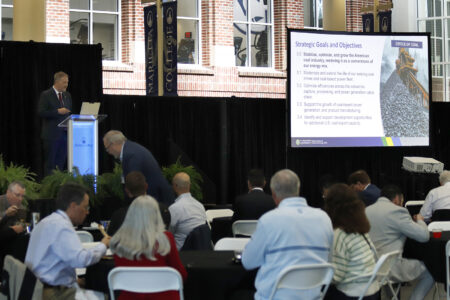
Energy development, environmental impact and the future of workforce training in Appalachia were the focus of a symposium hosted Tuesday by Marietta College's Center for Earth, Energy and Environment.
Industry leaders, policymakers and educators discussed how evolving energy demands intersect with economic development and environmental stewardship in the region. Keynote speaker Scott W. Tinker, chairman of Switch Energy Alliance, emphasized the importance of presenting a balanced view of global energy.
"There's a lot of completely factual things out in the world, but sometimes those facts are selected," Tinker said. "Fact completeness is hard. It's impossible, but making an effort to look at multiple sides of things is important."
Tinker said the future of energy will rely on a mix of sources rather than competition.
"They all do different things, and we need mixes of different kinds of portfolios," he said. "Those are healthy."
He noted that while renewable sources such as solar and wind can reduce emissions, they also entail distinct environmental trade-offs, including land-use impacts. Students entering the energy field, he said, will likely work across multiple sectors throughout their careers.
"If you're doing subsurface petroleum today, you might be doing geothermal in the future," Tinker said.
Discussion at the symposium also highlighted the growing role of the Ohio River in national infrastructure and energy transportation.
Taylor Abbott, executive director of the Ohio River Commission, outlined potential impacts of the proposed SHIPS for America Act of 2025 and related federal initiatives.
"We're finally seeing the government treat the Ohio River as an actual infrastructure national security asset," Abbott said.
If enacted, Abbott stated the legislation could support port and terminal development, expand energy transportation networks and improve supply chain resiliency along inland waterways, he said. It may also lead to the creation of "maritime prosperity zones" designed to attract private investment.
"The only way we get there is that we expand our workforce opportunities, because we have a shortage of workforce here in the region," he said.
Speakers also discussed the importance of collaboration between academic institutions and industry partners to prepare students for evolving careers in energy and environmental fields.
Ben J. Stuart, dean of the Center for Earth, Energy and Environment, said the center aims to broaden how students are trained for careers in the energy sector.
"We produce energy engineers, but the world doesn't always recognize that," Stuart said. "We want to make sure students can have those conversations across all forms of energy."
Stuart said the center is focused on integrating coursework that includes environmental impacts and alternative energy sources alongside traditional programs.
"I can graduate a petroleum engineer, but I can nudge them in other directions," he said, adding that future plans could include expanded programs in environmental sustainability and energy systems.
Organizers said the symposium is expected to be the first of several events aimed at fostering ongoing dialogue about energy, environment and economic development in the region.