
Wood County Juvenile Drug Court celebrates 100 graduates
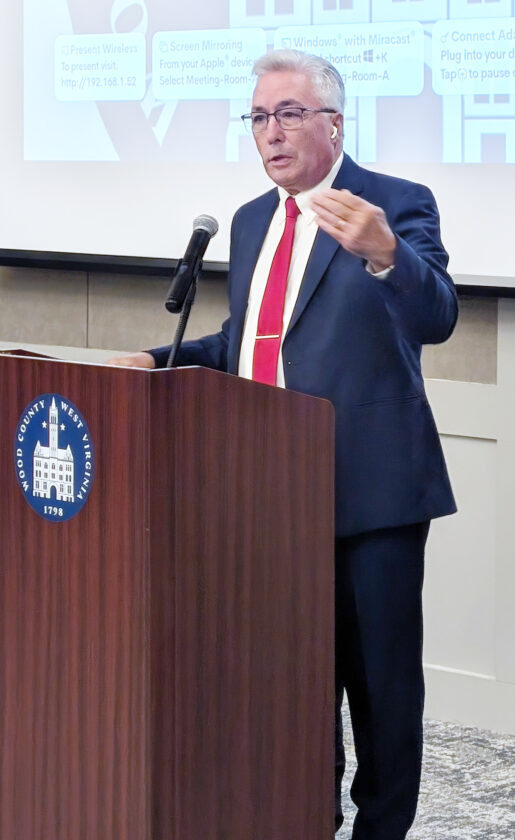
Wood County Family Court Judge Darren Tallman speaks at a graduation ceremony for the county’s Juvenile Drug Court Wednesday at the Resiliency Center in downtown Parkersburg. (Photo by Evan Bevins)
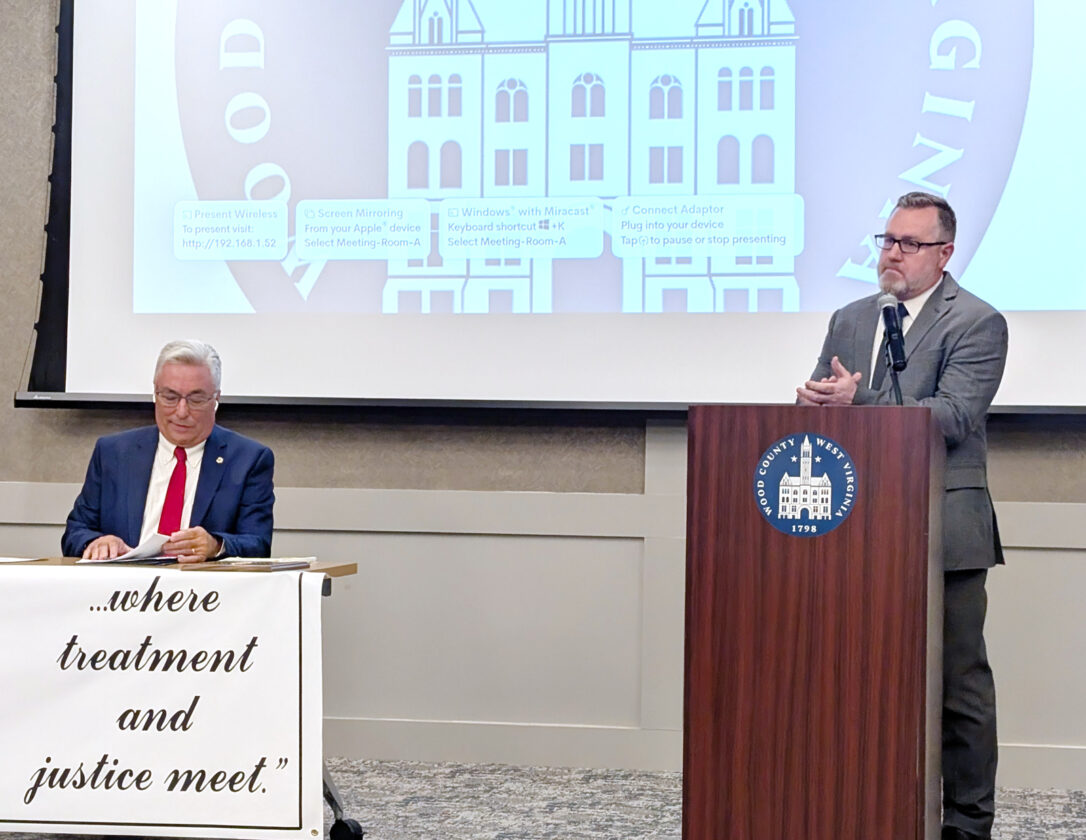
West Virginia Supreme Court of Appeals Justice Thomas Ewing, right, applauds Wood County Family Court Judge Darren Tallman during an event celebrating the 100th graduate of the county’s Juvenile Drug Court program Wednesday at the Resiliency Center in downtown Parkersburg. (Photo by Evan Bevins)
Wood County Family Court Judge Darren Tallman speaks at a graduation ceremony for the county’s Juvenile Drug Court Wednesday at the Resiliency Center in downtown Parkersburg. (Photo by Evan Bevins)
West Virginia Supreme Court of Appeals Justice Thomas Ewing, right, applauds Wood County Family Court Judge Darren Tallman during an event celebrating the 100th graduate of the county’s Juvenile Drug Court program Wednesday at the Resiliency Center in downtown Parkersburg. (Photo by Evan Bevins)
Trending
PARKERSBURG - As guests gathered at the Wood County Resiliency Center this week to celebrate the 100th graduation from the county's Juvenile Drug Court program, Family Court Judge Darren Tallman didn't just tell them how the program works.
He showed them.
Before honoring the 99th, 100th and 101st youth to complete the program - which combines treatment and ongoing judicial accountability in an effort to break young people out of the cycle of drug abuse - Tallman conducted a regular session in a large reception area instead of his usual courtroom. Before an audience of past contributors, public officials and other guests, he spoke with individual participants, asking about the results of drug screenings, school attendance and problems they faced in the preceding week.
The program can be completed in seven to eight months, but it varies for each participant. Tallman emphasized it is the teens' decisions that determine their progress and experience.
"We put in the guardrails, we hope we planted some seeds, but the kids have to do it themselves," he said.
The Wood County Juvenile Drug Court - which also includes youth from Pleasants, Ritchie and Wirt counties - is the second longest continually operating such court in West Virginia and the second to reach 100 graduates. It was established in 2010 and has been overseen since then by Tallman.
Treatment courts put those approved to participate in regular contact with a judge and other court officials while also working in treatment efforts, community service and social activities.
The program is divided into four phases, through which participants advance as they meet requirements. A failed drug test or other negative mark can result in a sanction, most commonly not getting credit for a week in the program. In some cases Wednesday, Tallman directed teens to write apology letters to family members or others and admonished them for missing classes in school.
Even if a teen had failed a drug screening, which automatically means their week won't count, Tallman said he looked for positives to celebrate as well, including academic progress or personal milestones. He praised those who had negative outcomes for what they'd done well and encouraged them to keep striving to reach the next phase.
Tallman acknowledged the participants sometimes give officials a run for their money, "but they also provide a lot of satisfaction for us."
Before speaking with the youth, Tallman discussed the history of the program and praised the three case coordinators he's worked with over the years, calling them "the heart" of drug court.
"It's a 24-hour-a-day, seven-day-a-week job," he said.
The initial coordinator, Judy Stephens, "treated the kids as if they were her own," he said. Her successor, Jessica Trippett, "believed she could make a difference and she actually did." Current coordinator Larry Whitehair, Tallman said, was at a participant's home the night before, helping to defuse a difficult situation.
The court is also supported by a treatment team made up of members of the rehabilitation and mental health community, as well as the court system and residents, who primarily assist on a volunteer basis, Tallman said.
"We couldn't exist without our community support and our volunteers," he said.
The court has also cultivated relationships with faith institutions like the Warehouse Church, which provided food and refreshments for Wednesday's graduation.
After working through the normal course of the program, Tallman invited up the three most recent graduates of the program.
One of them was a young woman the judge said he was skeptical to admit to the program due to multiple issues. But through 259 days of participation, she faced only one sanction and had negative results on all 63 of her drug screenings.
"We understand how tough a time you had," Tallman said.
One young man faced a number of challenges Tallman did not elaborate on in the semi-public setting. But he acknowledged the hurdles he had to overcome were greater than what the judge experienced in his own youth.
"The job for him was a lot harder than the job for me if I had to complete drug court," Tallman said.
The young man finished the program in less than a year with 41 negative drug screenings and no positives.
"He's one of our stellar, stellar graduates that we've ever had," Tallman said.
Then he asked the teen how he enjoyed his time in drug court.
"It wasn't bad," he replied.
Among the guests Wednesday was Supreme Court of Appeals of West Virginia Justice Thomas Ewing. Ewing noted he'd worked with family and adult treatment courts when he was a circuit judge in Fayette County, prior to being appointed to the state's highest court last year.
"It's a priority to me to get out here and support the graduates, the treatment teams and the judges," he said.
Ewing said he'd also worked with a truancy diversion program in Fayette County.
"One of the things I would always tell the kids is if you want a different result, make a different decision," he said.
Evan Bevins can be reached at ebevins@newsandsentinel.com.