
Humane Society of the Ohio Valley asks for help as overcrowding, funding concerns threaten no-kill status
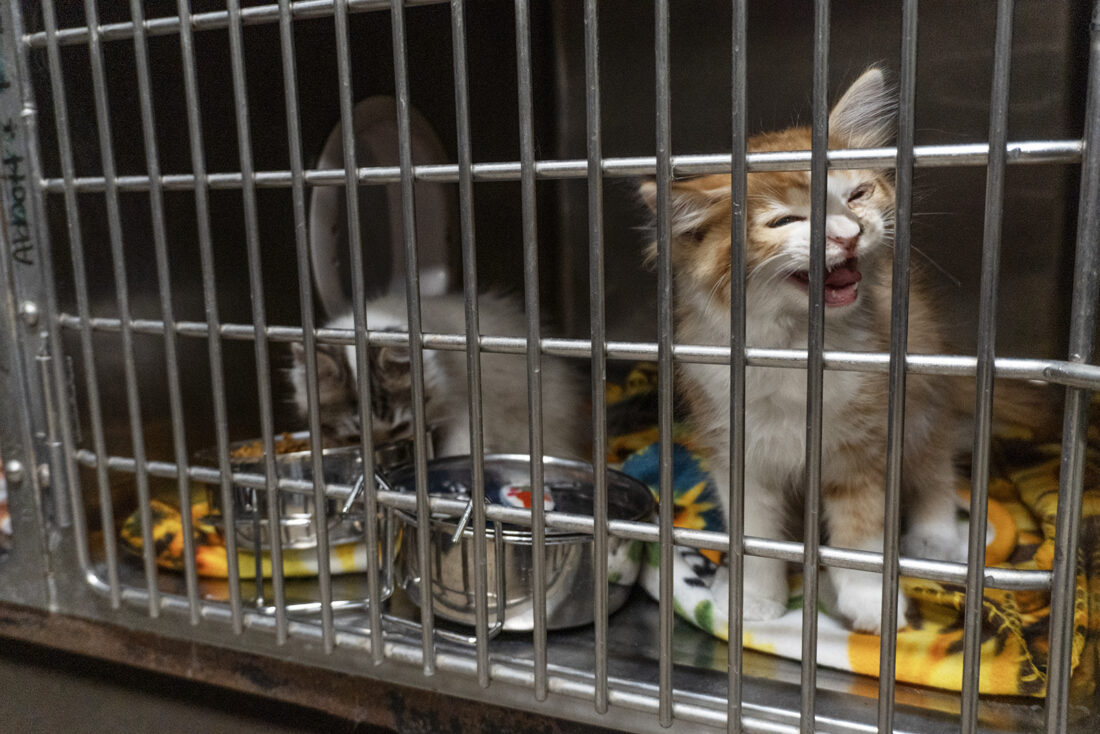
Two kittens share a cage at the Humane Society of the Ohio Valley on Tuesday afternoon. (Photo by Gwen Sour)
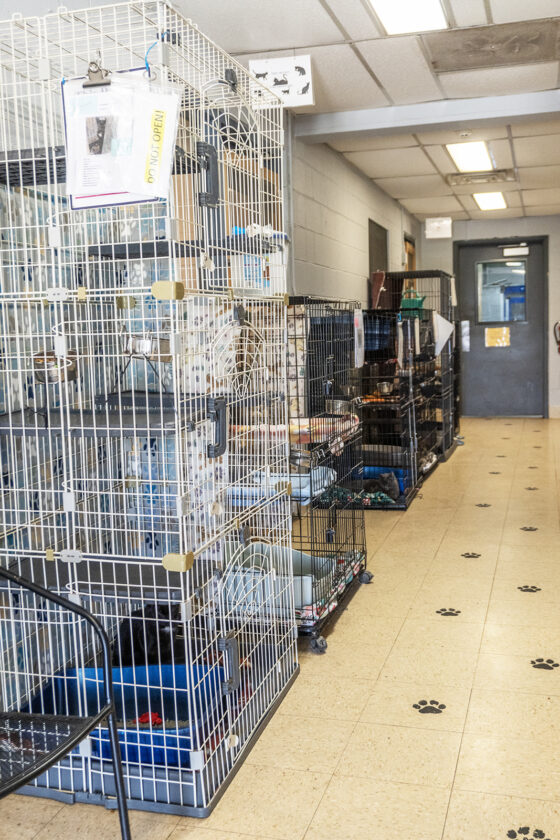
Extra cages line the front hallway of the Humane Society of the Ohio Valley, each one holding multiple cats and kittens on Tuesday. (Photo by Gwen Sour)
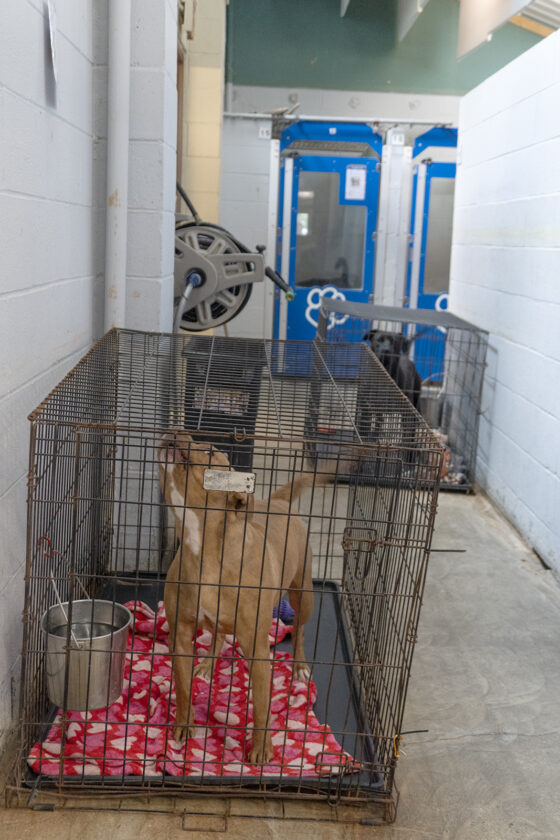
At the Humane Society of the Ohio Valley, extra crates line the room holding dogs. According to the organization, they are beyond capacity to hold dogs at the shelter. (Photo by Gwen Sour)
Two kittens share a cage at the Humane Society of the Ohio Valley on Tuesday afternoon. (Photo by Gwen Sour)
Extra cages line the front hallway of the Humane Society of the Ohio Valley, each one holding multiple cats and kittens on Tuesday. (Photo by Gwen Sour)
At the Humane Society of the Ohio Valley, extra crates line the room holding dogs. According to the organization, they are beyond capacity to hold dogs at the shelter. (Photo by Gwen Sour)
Trending
MARIETTA -- The Humane Society of the Ohio Valley is asking the community for help as overcrowding and funding concerns threaten the shelter's no-kill status.
Readers who are willing and able to adopt a pet can find profiles on specific animals in the Marietta Times' Furever Friends special pages, which will be featured in the Marietta Times on June 25.
The shelter became a no-kill facility in 2013, a milestone the organization said highlighted Washington County's commitment to animal welfare. In a release from the HSOV, shelter officials say that status could be at risk if additional funding and community support are not secured.
Amy Rogers, executive director of the Humane Society of the Ohio Valley, said the shelter remains overcrowded, particularly with dogs.
"We're still at about twice capacity for dogs," Rogers said.
According to a release from the shelter, HSOV could run out of operating funds as soon as August without additional help. The shelter said the increased animal population has driven up costs and placed additional strain on staff.
In 2025, HSOV took in 405 dogs and adopted out 352, according to the release. Shelter officials said adoption rates have dropped significantly since the COVID-19 pandemic, contributing to the current situation.
Rogers said most of the animals coming into the shelter are strays. The shelter is not taking owner surrenders except on a case-by-case basis, such as when an animal is in danger or injured.
"The majority, the overwhelming majority, are strays," Rogers said.
HSOV is asking residents to help by adopting, fostering, volunteering, donating money or supplies, and spaying or neutering their pets.
Rogers said monetary donations would help support the shelter's operating budget. Supplies are also needed and can be donated via the shelter's wish lists.
"Monetary donations would help," Rogers said, adding that donated supplies "would cut down on the expenses that come out of our operating budget."
Residents who cannot adopt but want to help can apply to foster animals. Rogers said foster applications are available online or can be completed in person at the shelter.
Volunteers also are needed to help walk dogs and care for animals. Volunteer orientation is held at 1 p.m. on the third Sunday of each month at HSOV. Volunteer applications are available on the shelter's website.
The shelter also encourages residents to spay and neuter their pets to help reduce animal overpopulation. HSOV has information about organizations that can assist with spay and neuter services.
Residents who are struggling to keep their pets are encouraged to contact the shelter before surrendering an animal. Pet food pantries and other resources may be available to help keep pets in their homes.
More information about adoption, fostering, volunteering, donations and other resources is available at HSOV.org or by contacting the shelter.
"We appreciate our community and want to continue this vital service for the animals of Washington County," the shelter said in the release. "We simply can't do this without your help."
Shelter officials said they hope to avoid closing or returning to a model that requires euthanasia because of space or funding limitations.
"The animals are counting on us," the shelter said. "With help from the community, we can take care of the animals of Washington County together."