
The Way I See It: Marietta the same size as it was in 1900
Trending
From a population standpoint, Marietta looks much the way it did in 1900. Throughout the 1800s Marietta was gaining people at a solid clip. Jobs were being added as factories were built and couples were having large families that filled schools throughout the city. By 1900 the population had reached 13,348 people. In 2020 the population was 13,385. Marietta in 2020 was virtually the twin to Marietta in 1900.
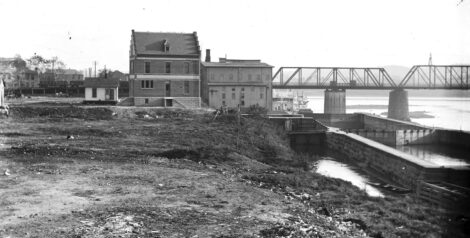
It is interesting to imagine the two "towns" and how they differ while at the same time being much the same. The two towns, of course, both had the natural boundary of the Ohio River to the south, and Muskingum River flowing through it. There was no bridge to Williamstown in 1900 and Marietta existed with just the Putnam Street Bridge to connect it to Harmar. Most people lived in the low-lying land along the number streets in the east side of the Muskingum and in the Harmar neighborhood.
In 1900, the Ohio River was a major connection to elsewhere, as were the railroads that served the town. The river, without modern dams, normally flowed much lower than it does today. When the flood of 1913 came, most of the residents got water in the first floor of their homes; some got it in the second story as well.
People didn't travel far to work or shop in 1900. It's a good thing, cars were not really a thing yet. They either walked, rode a horse or took the street cars to not only get downtown, but also to work and back. In a few years, after the construction of the Williamstown Bridge, they would be able to take it to Parkersburg as well.
There were no giant food stores on Pike Street in 1900, which was little more than a muddy path to Newport at the time. Shopping locally was the only way people could shop in 1900 and they normally would do it at the little market down the street, carrying home with them the food they would make for dinner. Stores like Kroger did exist, but they were the size that a convenience store is today. One of the things that I have always found fascinating not only with Marietta, but all small towns, was what they got along without.
Two towns, basically the same size. The town in 1900 though had little of the infrastructure that we have today. Marietta Memorial Hospital, for example, would not become the giant health care facility it is today for decades to come. People most certainly got sick and many of them died because the proper care would not be developed for generations.
Roadways were primitive at best. The bridges of the day were planked with wood and were designed for street cars and wagons, not the cars that would later come.
Traveling to other towns was difficult in 1900 and normally it took rail travel to get there. Colegate Drive did not connect on the east side of town, and few of the streets on that side of town had been constructed in 1900.
Both "towns" did have one thing in common. They were served by a daily newspaper named The Marietta Times. The Times had been a weekly publication for more than 30 years but converted to a daily in 1898.
From 1900 Marietta would continue to grow, it peaked in the 1960s and 1970s when the population was around 16,800. When I appeared on the scene in 1974, I joined one of the largest Marietta High School classes in history, with more than 420 students.
The classes have steadily declined in numbers ever since. Families are smaller now than they were in 1900, which leads to much smaller growth over generations. By the 1970s, many families lived in the newer neighborhoods like Harmar Hill and North Hills. Others did, and continue to, live in the suburbs of Devola, Reno and Oak Grove. None of the suburbs are within the city limits so they do not count as part of the total population. In 1900 they were mostly undeveloped farmland. The Marietta of 1900 was more densely populated than the one of 2020 with more people living in each of the houses.
Marietta is of course not the only town that is smaller now than it once was. It's common for northern cities.
They all have the same problem; fewer people means that each of them must pay a bigger share of the cost of maintaining the infrastructure that barely existed 120 years ago.
Art Smith is online manager of The Times, He can be reached at asmith@mariettatimes.com