
Hunting and fishing in early Marietta
Trending
Marietta's first settlers had to find their own food. No supermarkets or convenience stores then. Some foodstuffs could be brought in from the east but not enough to survive on. Fortunately, the new territory was a hunting and fishing paradise. Colonel Joseph Barker's journals provide fascinating details. He was a native of New Hampshire who moved to Marietta in 1789 with his wife and father-in-law Captain William Dana.
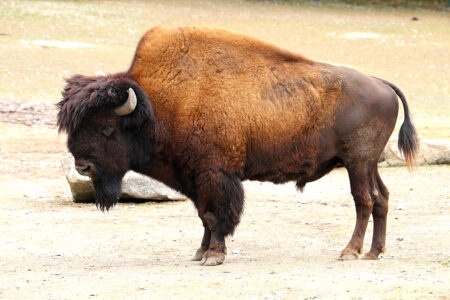
Deer, turkeys, squirrels, and woodland buffaloes were present in large numbers. The woodland buffalo, now extinct on the eastern US, is heavier and has a humpier hump than the plains buffalo. Bears, wolves, and panther were around but mostly stayed away from inhabited areas.
Rivers and streams were full of fish - catfish, pike, salmon, sturgeon, and perch. Barker declared the pike "the king of fish in our waters." Judge Gilbert Devol and his son caught a pike weighing 96 pounds. It was cooked for the first Fourth of July celebration in 1788. Large fish like the pike were attracted by chum (chopped up bait and fish refuse) dumped in the water. Once spotted, the fishermen chased the target fish in a canoe until it tired and landed it with a spear. In 1790 James Patterson, who fished for a living, caught a huge catfish. He had set out a trotline in the evening, then anchored the canoe and slept. The fish hooked itself and pulled the anchored canoe to an island - where Patterson found himself upon waking.
Hamilton Kerr hunted for Fort Harmar soldiers. Kerr was an accomplished backwoodsman, hunter, and fisherman who lived on Kerr's Island (Buckley's Island today). Once he used a barbed fishing spear to keep attacking Indians at bay. He earned enough money in just one hunting season to buy a share in the Ohio Company. Joseph Buell, a soldier stationed at Fort Harmar, reported in his journal that hunters killed a buffalo that was "eighteen hands high (about 6 feet) and weighed one thousand pounds."
Some wildlife was too plentiful and threatened crops and livestock. A prevalence of beech trees attracted turkeys in such large numbers that they damaged corn, wheat, and oats. To protect their crops, locals killed so many turkeys that their market value as a food source approached zero. One man killed 40 in a day. Barker was surprised at the multitude of squirrels and their ferocity in attacking crops. He reports that squirrels swarmed "by the millions...like the locust of Africa..." Often crops had to be harvested early to protect them from the squirrels. Journals of pioneers reported seeing hundreds of squirrels at a time swimming across the Ohio River. They migrated in large numbers to find food in years of lower acorn production.
Despite the abundance of fish and game, food became scarce in the spring of 1790, the "Starving Year." There were meager harvests that year. Indians had chased off or killed much of the wild game. People shared milk with families who had children. Hungry settlers resorted to eating shoots of pigeonberry and leafy tops of potato plants and drinking spice-bush tea. Isaac Williams across the river in Virginia shared needed crops with Ohio settlers.
That summer one family in Belpre had been without meat for several days. The desperate husband, not a hunter, went hunting not expecting success. He happened upon a fawn which he killed. He was struck with an overwhelming sense gratitude for God's provision for his family. That fall, an excellent crop harvest brought back deer and turkey in such numbers that settlers were reminded of God's provision of quail to the Israelites. Wild game and fish in great abundance continued to supplement crops and livestock raised by the settlers.