
Rufus Putnam ingenuity ousts British from Boston
Trending
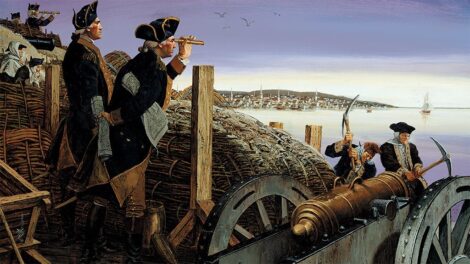
Rufus Putnam is considered the founder of Marietta, Ohio. He had a distinguished Revolutionary War record; his specialty was fortifications. In March 1776, George Washington was planning a campaign to force the British army out of Boston. Rather than a risky frontal assault, he and his staff decided upon secretly fortifying Dorchester Heights with heavy artillery. Control of those hills would give Americans effective command of the city. Rufus Putnam was a key player in this early Revolutionary War action.
The cannons brought from Fort Ticonderoga were ready. Bombardments at other locations were planned to distract the British. Nearly 5,000 recently recruited and enthusiastic patriots were eager for action. There was only one problem: the cold. The ground was too frozen to build trenches, earthen walls, and timber structures needed to defend the positions once occupied.
One night Putnam, then serving as an engineer building fortifications, was invited to dine at headquarters. George Washington asked him to stay afterward. He spoke passionately about the importance of fortifying Dorchester Heights. He was frustrated that frozen ground was holding things up. Rufus recalled, "the General (Washington) directed me to consider the subject and if I could think of any way in which it could be done, to make report to him immediately"
Rufus Putnam was the right person for this situation. He had mastered several trades by the time he was 20 years old. He was curious and relentless in solving problems. He started back to his own quarters, his mind racing. A cold wind whipped around him, an annoying reminder of the urgent situation. He passed the quarters of General Heath. Putnam recalls vividly that "(divine) providence" prompted him to stop and visit Heath. Heath welcomed him. Putnam noticed a large book on military fortifications sitting on a table. He coaxed a reluctant Heath into lending it to him.
The next day he perused the book. He saw an illustration of a "chandelier" -- not the light fixture of today.
"What is that?," he wondered, "....it is something I never heard of before." The next page explained how it was used. It would work! The structure was a low tech solution: Tightly wrapped bundles of sticks (fascines) were placed in wooden frames (chandeliers). No digging required. It would stop small arms fire and grape shot. They could be quickly assembled, transported, and mounted on the hill. Washington approved, and immediately they started building the structures.
At 7 p.m. on March 4, 1776, 4,000 Continental Army troops steathily hauled armaments, frames, and bundled sticks up the hill in hundreds of oxen carts. Thunderous cannon fire from other locations distracted the British -- and terrified Boston residents. A full moon helped the patriots; a light fog hindered British visibility. Bales of hay piled along the route stifled noise. By 4 a.m., the operation was complete.
At daylight, British sentries were shocked to see the plainly visible artillery placements. British General Howe reportedly said: "The rebels have done more in one night than my whole army would have done in a month." Days later, the British evacuated Boston and never returned. It was a major victory for the patriots, enabled by the quick thinking of Rufus Putnam. A decade later, Rufus Putnam was at work on another project: planning a new settlement in the Ohio River Valley at Marietta.
This article was adapted from local history blog earlymarietta. To learn more about the Washington County Historical Society, call 740-373-1788 or visit wchshistory.org