
MARIETTA - The Hearts & Hands 4 Paws 5K was held Sunday in Marietta to raise money to pay veterinarian service expenses for spay and neutering efforts in the area. Around 200 people, many with…

MARIETTA - The Hearts & Hands 4 Paws 5K was held Sunday in Marietta to raise money to pay veterinarian service expenses for spay and neutering efforts in the area. Around 200 people, many with…
VIENNA – The Boys & Girls Club of Parkersburg brought supporters together for a chance to win cash while helping cover…
CHARLESTON – It has become apparent that the Wetzel County Technical Education Center, under the guidance of Director J.C. Kimble…
BELPRE — Handmade goods, holiday decorations and a few feathered visitors helped bring people together Saturday at Pioneer Presbyterian Church…
SARDIS, Ohio - Students interested in employment in maritime careers had an opportunity Friday to learn and explore various aspects…
Buckeye Hills Regional Advisory Council meeting The Buckeye Hills Regional Advisory Council will meet at 10 a.m. Wednesday at the…
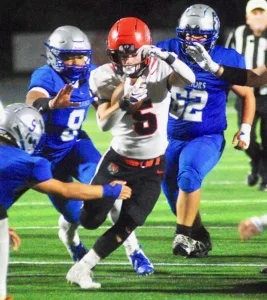
NEW CONCORD – Marietta College scored 42 straight points to erase an early deficit and went on to post a convincing 49-28 win over rival Muskingum University Saturday afternoon. The Pioneers reclaim the Shrine Trophy after Muskingum snapped Marietta's eight game win streak in the series last year. "Credit to Muskingum, they came out…
The Marietta College women's soccer team delivered a historic performance Saturday, breaking multiple program records in…

The Belpre Area Chamber of Commerce celebrated with yet another successful annual dinner last week — this time with the theme being “Survivor.” As attendees made connections, learned from panelists … perhaps got ejected from their islands … and more, it was clear the chamber board and Executive Director Karen Waller understood how to…
West Virginia needs a strong, powerful voice in Washington, D.C., now more than ever — someone…
The Ohio Domestic Violence Network released its annual fatality count this week, and the news is…
Worried about local school closures and consolidations? How about the Hope Scholarship, or development of a…

SISTERSVILLE – Hospital officials, community members, state and local leaders, and representatives of Memorial…

CHARLESTON – United Bankshares Inc. this week reported earnings for the third quarter of 2026 of…

Oct. 6 marked the date of the officially finalized merger between Paramount Skydance and Warner Brothers Discovery into the mass media company Skydance Corporation, now co-owned by right wing billionaire, Trump acolyte, Oracle co-founder, and number one individual donor to the genocidal Israel Defense Forces, Larry Ellison, along with his son, founder and CEO…