
Early Marietta: The Port Royal Experiment
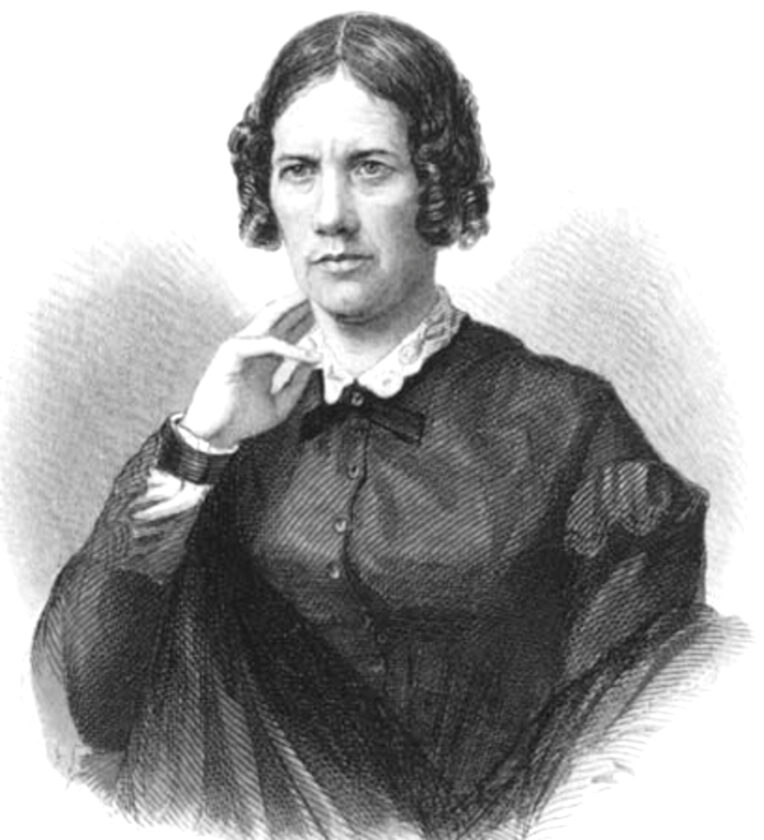
Engraving of Frances Dana Gage. (Photo provided)

Scan QR code to learn more about Frances Dana Gage.
Engraving of Frances Dana Gage. (Photo provided)
Scan QR code to learn more about Frances Dana Gage.
Trending
I had never heard of the Port Royal Experiment. In 1861, Union forces took control of the islands around Beaufort, Port Royal, Paris Island, and Hilton Head in South Carolina. 195 plantations were abandoned, liberating thousands of slaves. The Union army, federal government, and charity groups stepped in to provide care and orient the freed slaves to independent living.
When Marietta native and social activist Frances Dana Gage (1808-1884) heard about it, there was no holding her back. She left Ohio and her sick husband to help. Supervisor General Saxton was impressed by Frances’ spirit and organization skills. He appointed her as Superintendent over 5 plantations and 400 slaves on Parris Island, SC.
She spoke of her work at a July 4th speech in 1863 at Springfield MA (edited quotes): “Down in South Carolina, the first liberated slaves are living and working. God has led many to do this work of educating them. This experiment has been entirely successful. The negroes are ready to be taught and lifted up. They have a new language to learn; theirs has been corrupted by slavery.” Frances said that she had received many donations from Northerners of practical things like clothing. The challenge: how to distribute them. At first, she believed handouts were best. But she soon realized that it was better for able-bodied slaves to prioritize their wants and buy items with money earned from their labor. Charity was needed for the elderly, disabled, and children.
Frances continued, “You have seen the marks of scourges on slaves’ backs. Those are men; I have seen the bodies of women thus scarred. A horrible amount of cruelty has prevailed here.” She concluded, “Let us provide what they need to live. One of their songs says, ‘Oh, don’t get weary waiting, brothers.’ Let us take to heart this lesson.”
We get further insights from a thank-you letter (edited, below) that Frances wrote to people in Tallmadge, Ohio, dated January 29, 1863, who had sent donated material. "I received your package. My heart leaped for joy. Little did I dream that my visit to your homes would lead to your sending this offering of kindness... I have seen how slaves live at the plantations. Let me describe one cabin, sixteen feet long by fourteen broad, divided into two rooms. They sleep on board bunks with rice straw or an old mattress, dirty clothes, bits of carpet, cotton rags, and blankets…In this cabin, one of the best, lived seven or eight persons. The cabin floor was dirty; pots and kettles simmered around the fire. A board cot held a sick girl, Mary, who had been sick a twelve month with a fever, rheumatism, and scrofula (an infection of lymph nodes in the neck). Oh, such a sight…I dare not complete the picture. Poor Mary will suffer less tomorrow because of that box from Tallmadge."
"Old Flora, a slave, says she is getting along nicely--has thirty-six grandchildren. She asks me: 'Oh! missis, me wants’ a flannel; ole massa never gits us flannel.' Judy’s baby was rolled in a bit of blanket. 'Please missus git me something for baby.' Judy’s eyes will sparkle tomorrow over a pretty calico slip. Old Sharper, who has been whipped a thousand lashes in his day who says: 'Ebery Monday morning, missus, ole Sharper git de lash,' Old Sharper shall have a coat like a 'gemman.' (gentleman)."
Frances Dana Gage's husband died, and after a year she returned to Ohio. She continued garnering support for slaves and the Port Royal Experiment by using her strongest talent: public speaking and writing. As one researcher noted, "She had but one pair of hands, while her voice might set in motion a hundred, nay, a thousand pairs of hands."