
Roundtable to hear presentation on Lightning Brigade
-
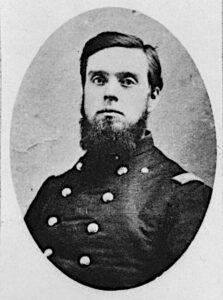
- Unable to successfully engage Confederate Gen. John H. Morgan’s cavalry on several occasions in Kentucky and Tennessee in 1862, Union brigade commander Col. John T. Wilder innovated to create a template followed by the U.S. Military special forces in the decades that followed when he armed his men with Spencer repeating rifles to expand firepower and mounted his infantry on horseback to achieve speed and mobility. (Photo provided)
-
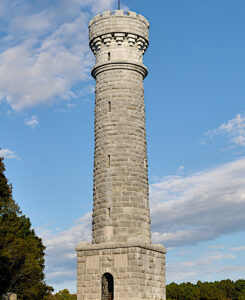
- The Wilder Brigade Monument rises 85-feet above the Chickamauga and Chattanooga National Military Park in Walker County, Ga. Col. John Wilder’s Lightning Brigade was one of the first units on the battlefield on Sept. 17 and the last to leave on Sept. 20, 1863. The battle was a shocking Union loss. The monument marks the location of where the brigade withstood numerous Confederate attacks yet stood stead fast to cover the retreat of Army of the Cumberland to prevent what could have been a much more devastating Union defeat. Gen. Rosecrans later observed, “His (Wilder’s) command merits the thanks of the country for his noble stand at the crossing at Chickamauga”. (Photo provided)
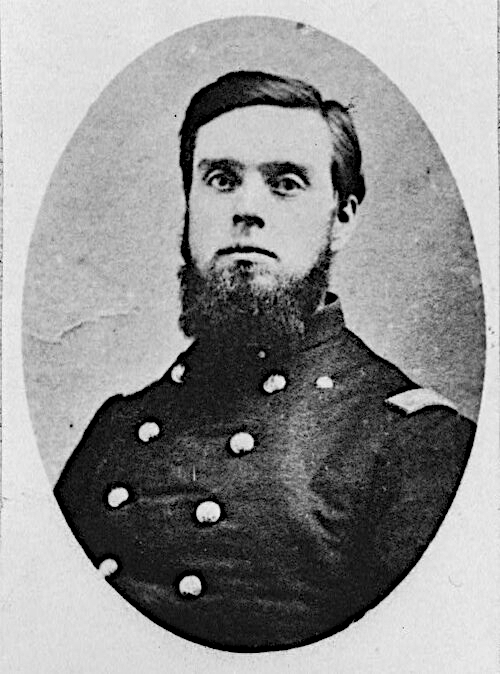
Unable to successfully engage Confederate Gen. John H. Morgan's cavalry on several occasions in Kentucky and Tennessee in 1862, Union brigade commander Col. John T. Wilder innovated to create a template followed by the U.S. Military special forces in the decades that followed when he armed his men with Spencer repeating rifles to expand firepower and mounted his infantry on horseback to achieve speed and mobility. (Photo provided)
A program on Col. John T. Wilder and Wilder’s Lightning Brigade will be presented by the Civil War Round Table of the Mid-Ohio Valley at 7 p.m. May 21 at the Blennerhassett Museum of Regional History in Parkersburg.
Speaking will be Scott Diezman, a retired U.S. Air Force officer, military historian and battlefield guide. Diezman is a native of Nelsonville.
Wilder (1830-1917) is recognized as a mechanical genius and among the most forward-thinking and aggressive of Union army brigade commanders. In clashes with Confederate cavalry forces early in the Civil War, Wilder quickly recognized the Union army’s shortcomings both in the number of resources deployed as well as obsolete field tactics followed by Union cavalry.
He immediately applied his initiative to the development of a new and highly innovative style of fighting.
Wilder outfitted his infantry soldiers with Spencer seven-shot repeating rifles and adopted tactics to optimize the superior firepower from the weapons and mounted his infantry regiments on horses for speed and maneuverability. Wilder’s mounted infantrymen moved rapidly from point to point, but deployed and engaged the enemy as infantry with one essential difference, the breechloading Spencer rifles enabled them to fight prone or from behind cover without undue exposure while reloading compared to their counterparts who were armed with single-shot, muzzleloading rifles.
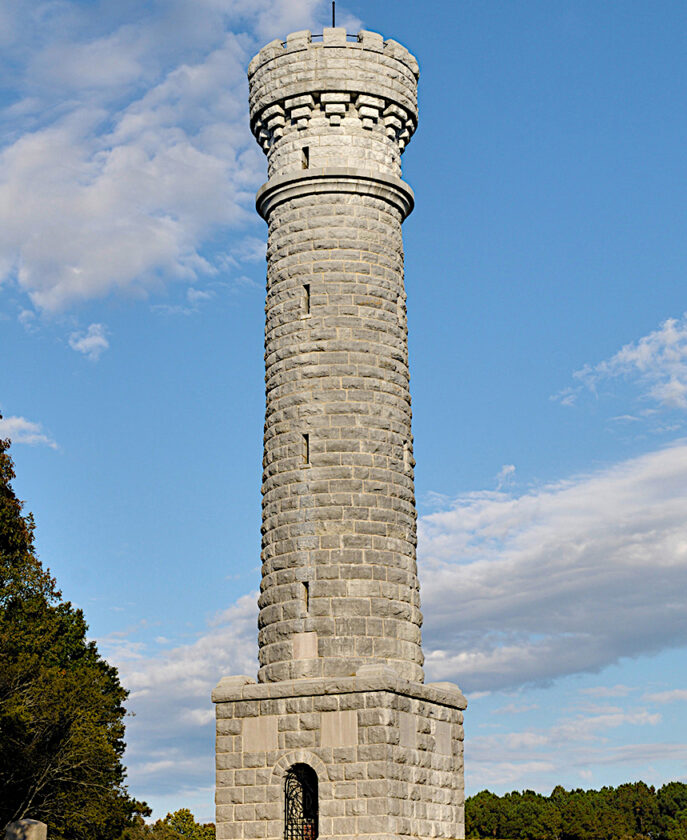
The Wilder Brigade Monument rises 85-feet above the Chickamauga and Chattanooga National Military Park in Walker County, Ga. Col. John Wilder's Lightning Brigade was one of the first units on the battlefield on Sept. 17 and the last to leave on Sept. 20, 1863. The battle was a shocking Union loss. The monument marks the location of where the brigade withstood numerous Confederate attacks yet stood stead fast to cover the retreat of Army of the Cumberland to prevent what could have been a much more devastating Union defeat. Gen. Rosecrans later observed, "His (Wilder's) command merits the thanks of the country for his noble stand at the crossing at Chickamauga". (Photo provided)
Diezman will examine how these innovations, combined with Wilder’s leadership and capable and confident soldiers, made Wilder’s Lightning Brigade the template for special forces in the Civil War and for the decades that followed.
Diezman retired after 20-years of service as a lieutenant colonel in the Air Force where he was a satellite engineer and program manager for multiple space systems. He served a tour of duty in Iraq during Operations Iraqi Freedom and New Dawn.
A native of Nelsonville, he grew up in New Lexington, Ohio, and graduated from Embry Riddle Aeronautical University with a degree in aeronautical engineering. He earned a master’s in space studies at the University of North Dakota.
Following retirement from the Air Force, Diezman served a decade as the subject matter expert on space-based intelligence systems to the undersecretary of defense for acquisition and sustainment at the Pentagon. He is currently a satellite engineer and program manager adviser at the National Reconnaissance Office in Chantilly, Va.
Diezman also studied leaders throughout history and Wilder is among his favorites.
“Wilder’s capacity to innovate and adapt to evolving warfare strategies resulted in battlefield successes and changed the way we fight wars,” Diezman said.
Diezman has been a student of the Civil War since childhood when he discovered that his great-great grandfather served in the 18th Ohio Volunteer Infantry regiment recruited in Athens.
He and his family reside in Centreville, Va. In his spare time, he conducts research at the National Archives in Washington and collaborates with Civil War authors and historians to enhance the presentation on the Lightning Brigade.
Diezman also leads tours of the Chickamauga Battlefield and Chattanooga area.
The presentation is open to the public and there is no cost to attend. Donations will be accepted to defray a portion of the cost of the event.
The program is made possible through collaboration with the Blennerhassett museum. The meeting venue is handicapped accessible and accommodations for other disabilities are considered upon request.
Local News
Registration open for West Virginia 988 and Crisis Intervention Team Summit in Parkersburg
PARKERSBURG — Registration is open for the annual West Virginia 988 & Crisis Intervention Team Summit, ...
Ace Parsi, local advocates discuss Parkersburg federal job cuts and sanitation issue
Buckeye Hills Regional Council awarded NADO Excellence in Regional Transportation
Local events
Meetings ¯ The Buckeye Hills Regional Advisory Council will meet at 10 a.m. today at the Buckeye Hills office, ...
Around Town
Buckeye Hills Regional Advisory Council meeting The Buckeye Hills Regional Advisory Council will meet at 10 a.m. ...
Lions Club setting up Flags for Heroes on Saturday
The Williamstown Lions Club will be setting up Flags for Heroes on Saturday with a noon dedication ceremony at ...