
Trending
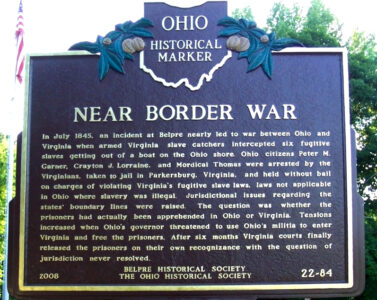
July 10, 1845, 2:00 am. It was pitch black on the Ohio River; a crescent moon had set in the west at midnight. A boat with 6 escaping slaves - 3 adults and 3 children – from the Harwood Plantation in Wood County Virginia had pushed off from Parkersburg, towards Ohio near Belpre. The plan was set up by an itinerant preacher named Romaine. Only the sloshing of oars working through the water broke the silence. Six members of the Underground Railroad (“UGGR”), waited on the Ohio side to guide them north to freedom.
Also waiting on that dark Ohio shore were 16 armed men from Wood County. They’d been tipped off. The UGGR men helped the escapees ashore. Then the Wood County men burst out of hiding. In the confusion one slave, preacher Romaine, and two UGGR men escaped. All others were captured. The slaves were returned to Harwoods. Recaptured slaves might endure flogging, harsher duty, wearing of collars or shackles, or be “sold down the river" to worse conditions in the Deep South.
The captured Ohioans were jailed in Wood County without access to their own attorneys. Bail was denied; no Virginia resident was willing sign a bail bond. Prominent Mariettans Nahum Ward, William P. Cutler, and Anselm T. Nye offered to guarantee a bond; that was disallowed.
Newspaper coverage and word of mouth spread the story. The Richmond Enquirer expressed alarm that ... “nests of Abolitionists” in western Virginia counties “have deliver(ed) anti-slavery lectures, without molestation…” warning that Abolitionists’ “mischievous and fanatical schemes,” ... will place lives of Virginia citizens in “imminent peril.” The Cleveland Weekly Leader opined that this was a “plot laid in Virginia to entrap men in Ohio."
Ohio Governor Mordecai Bartley conferred with William P. Cutler, Washington County's Ohio House member. Bartley wanted to send 100 militia to extract the prisoners by force. Cutler counseled holding off. There was verbal jousting between the governors. Virginia Governor McDowell lectured Ohio Governor Bartley about the Fugitive Slave Laws. Bartley fired back, "I tell you plainly, Sir, with proper respect and due deliberation, that Ohio will not submit to such wrongs," and that its citizens may "resort to violence."
Tensions remained high. Numerous Ohio groups met to consider measures to free the jailed Ohio men. In Parkersburg, guards were posted at the point, expecting an armed attack from Ohio. One night a guard heard a bustling noise at river's edge. Word spread that abolitionists from Ohio had landed and were forcing their way into town. The Captain assembled the guards and as noise got closer gave the command: FIRE! The "enemy" was the town bull, so full of bullet holes that it could not be tanned.
On September 2 the defendants were "perp-walked" to the Wood County Court. They pleaded not guilty. Bail was again refused. The jury trial showed that the justice system was working after all. The jury found the men guilty IF the site of their capture was determined to be in Virginia. The state boundary location became the key to the verdict.
The boundary question was placed before a Virginia Court of Appeals in December 1845. Congressman Samuel F. Vinton argued that the boundary was the low water mark of the river, placing the men in Ohio, not Virginia. The judges deadlocked on the issue; further action was deferred to the next session in June 1846.
On January 10, the men were granted bail and released. The case was never taken up; maybe the Virginia legal authorities tired of the controversy. Armed conflict was averted this time. Sixteen years later Virginia and the Civil War were on for real, though western Virginia stayed pro-union, and in 1863 became West Virginia.